Transition in Resources, Relationships, and Understanding Support Together
Collective impact is an approach to addressing complex social issues that involves bringing together governments, service providers, and community members to work collaboratively towards long-lasting change. It recognizes that systems change requires the commitment, shared vision, and collective action of people across different sectors.
First introduced in 2011 by John Kania and Mark Kramer, collective impact initiatives require five key conditions for success:
A common agenda
Shared measurement systems
Mutually reinforcing activities
Continuous communication
Backbone support organizations
In British Columbia, when a youth in care (e.g., in a foster home, group home) turns 19 years old, they formally transition out or ‘age out’ of the government care system. This means that the financial and emotional supports that youth previously relied on are often lost. While 92% of parents in BC continue to provide their children with some form of support after they turn 19, whether financial, emotional, or material (Fostering Change, 2016), many youth who have left government care are not able to rely on such supports and often experience financial hardship and problems finding and maintaining housing. For example, 29% of young people report that aging out of care led to their first experience with homelessness or housing insecurity (Representative for Children and Youth, 2020).
TRRUST’s work centres on closing gaps in support and ensuring that young people with care experience thrive. TRRUST affirms that youth in care deserve a transition into adulthood that is as extended and supported as that of their peers and we are dedicated to making this a reality.
The Collective Young Leaders (CYL) is a diverse group of young people with lived experience of the government care system in BC that informs all decisions and aspects of the initiative. CYL members sit on each working group and passion project, as well as the Strategic Advisory Committee.
Members of the collective represent youth with lived experiences, government agencies, health partners, community organizations, and other stakeholders from various sectors, including housing, education, employment, mental health, substance use, and health care.
The Strategic Advisory Committee comprises cross-sectoral leaders, including members of the Collective Young Leaders, who guide the broader strategy and vision of the collective.
McCreary Centre Society serves as the backbone organization for TRRUST to provide the supporting infrastructure and administration to help the collective function smoothly.
A key condition of any collective impact initiative is shared measurement, where participating members of the collective gather and share anonymous data based on a common and agreed-upon set of measures. This data helps assess the progress of the collective and identify where additional work is needed.
TRRUST member agencies are sharing anonymous data related to the living arrangements of the youth they serve to help the collective understand the housing needs of youth transitioning out of care. Quarterly reports of this data are available for download:
A data walk is an activity that shares data in engaging, interactive, and community-friendly ways that supports participants to engage with and reflect on the findings. TRRUST has led two data walks for members, each with the goal of informing the collective's strategic plan and activities, to generate excitement and discussion about the data, and to encourage continued contributions to shared measurement activities. A summary report was prepared after each data walk:
On December 3, 2025, TRRUST hosted a second data walk gathering. Data was separated into the following categories: economic well-being, education, food security, housing, and wellness.
2025 Data Walk posters:
On January 24, 2024, TRRUST hosted the first data walk gathering for the collective. Data was organized into the TRRUST working groups ('clusters') that were meeting at the time: education; employment; financial stability; health, wellness, and culture; and meaningful connections.
In addition to the broader work of the collective, TRRUST members work on tangible, time-limited Passion Projects focused on specific barriers and opportunities for youth aging out of care. Current Passion Projects include:
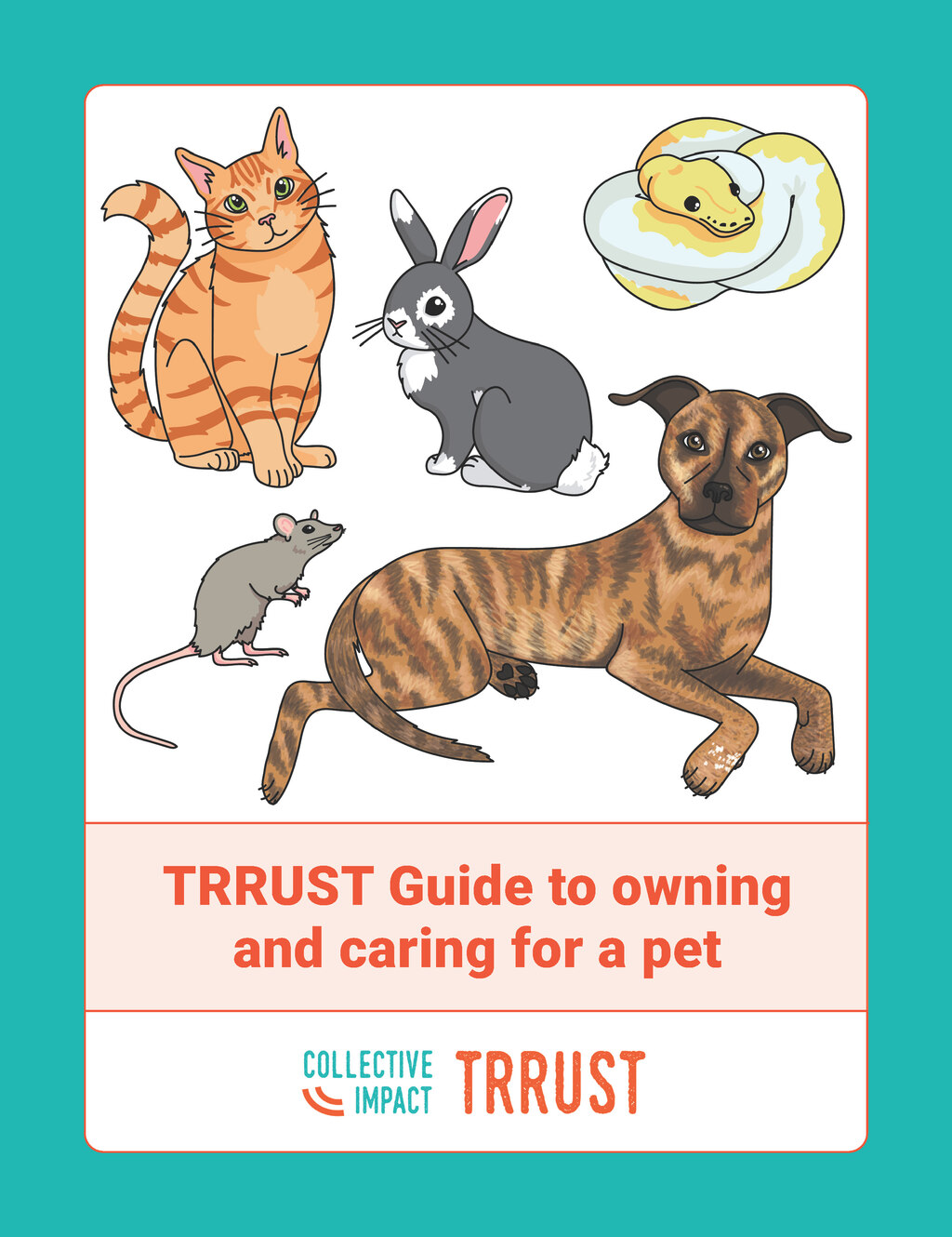
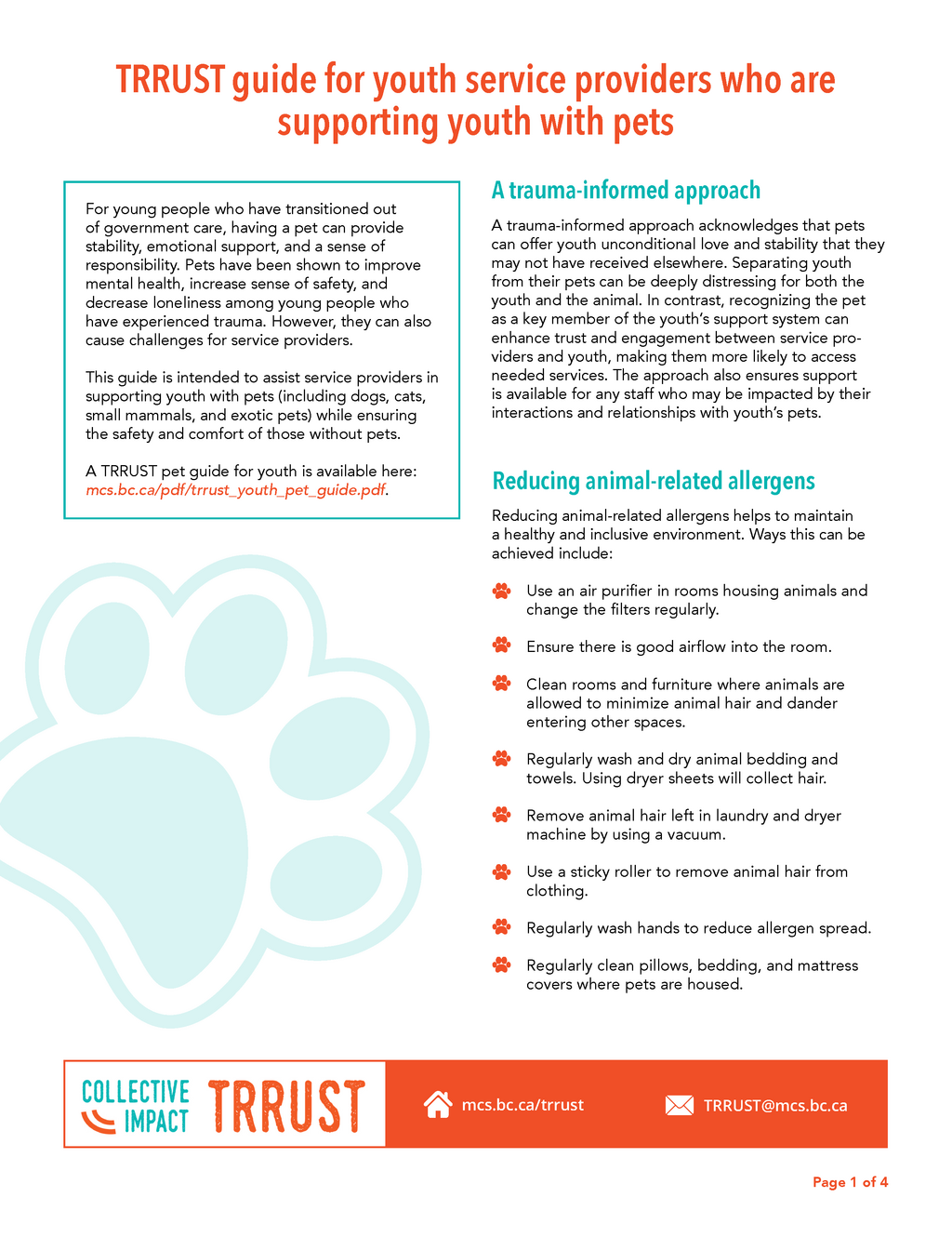
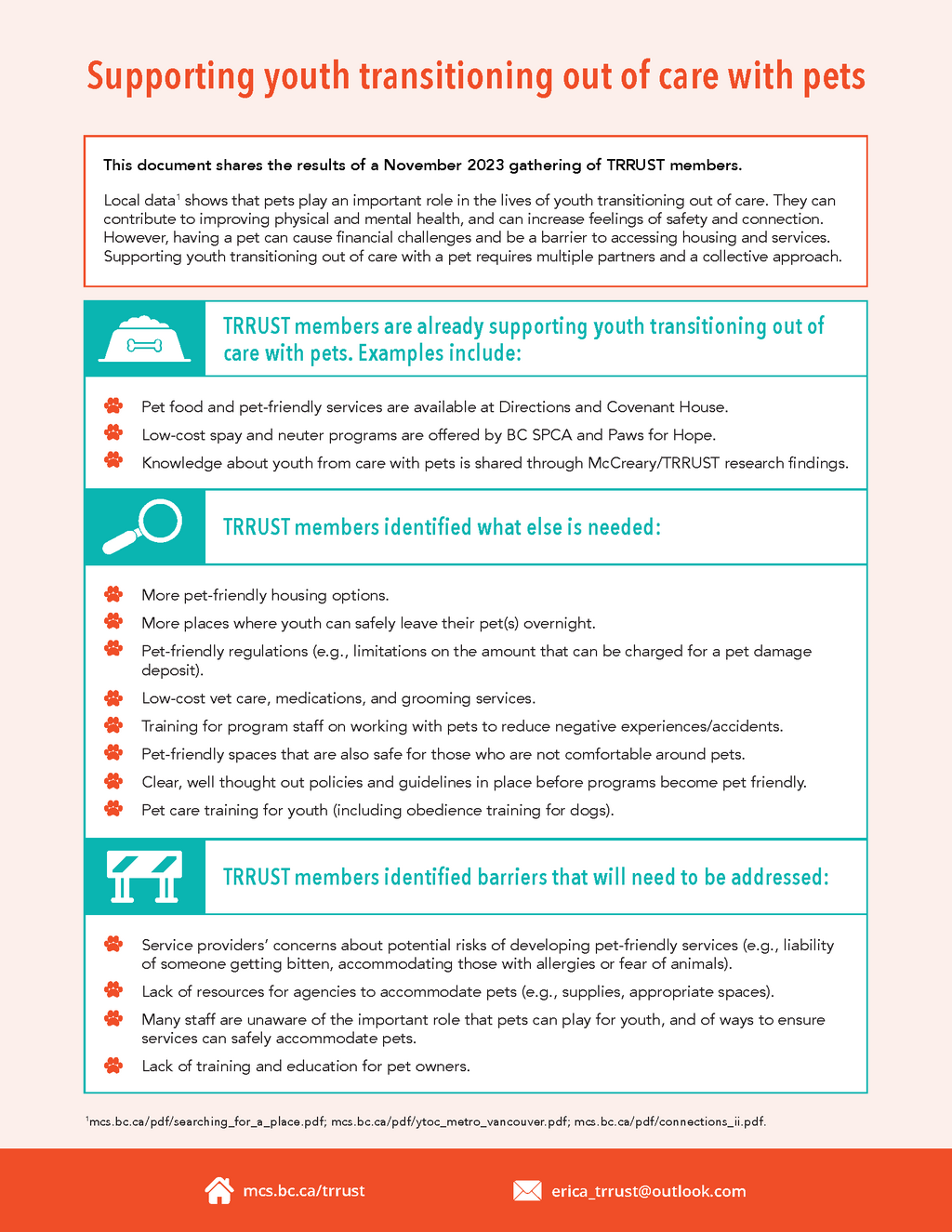
The Pets Passion Project aims to address the challenges faced by youth with pets while raising awareness about the needs of both the young individuals and their animals. The group has developed a workshop and printed resources tailored for youth and service providers, which will be available soon. Additionally, they are currently creating a curriculum for post-secondary students pursuing careers in health and social services.
This Passion Project aims to reduce food insecurity among youth transitioning out of care in Vancouver by reducing barriers to existing food access programs and fostering a community where no young person goes to bed hungry. The group has developed a youth-friendly calendar of local programs, and completed a youth engagement initiative to canvass perspectives on gaps and needs among youth currently accessing food banks or community meal programs.
YOUTH ENGAGEMENT SUMMARY REPORT
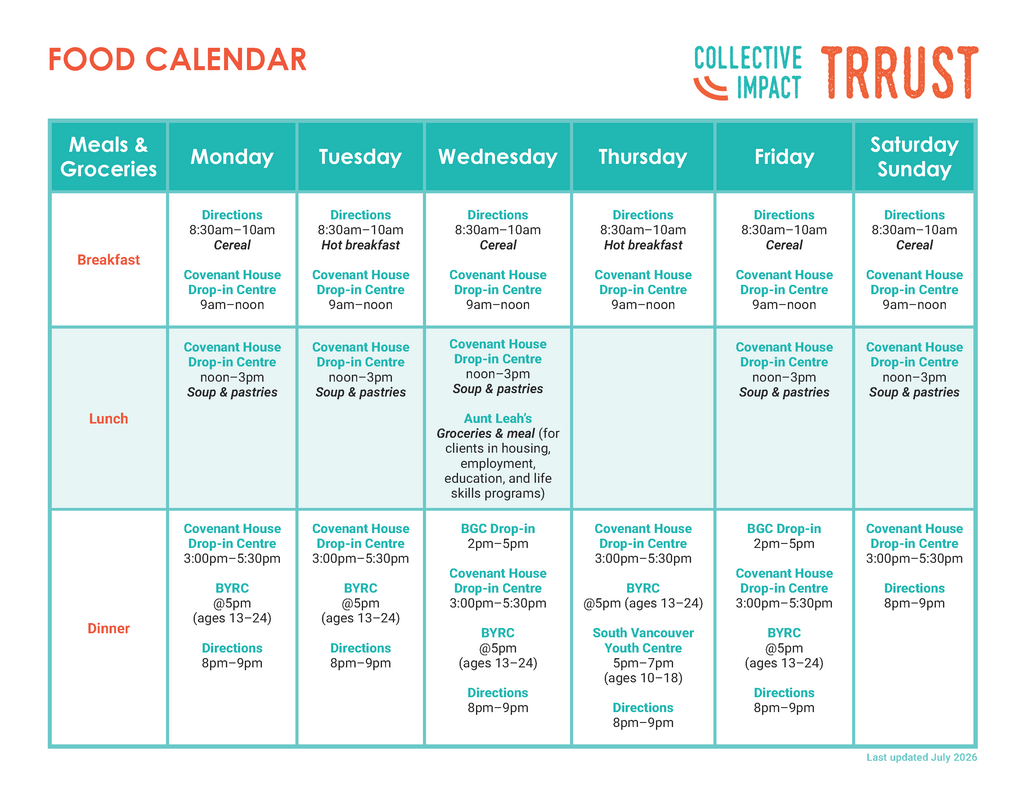
FOR YOUTH & SERVICE PROVIDERS
Calendar of free meal, food, and grocery programs for youth in Vancouver.
Last updated July 2026.
The Housing Passion Project works to improve access to safe, stable, and affordable housing for youth transitioning out of care in Vancouver. The group is working with local housing co-operatives to secure units for young people leaving care and living in Vancouver.
Four times per year, TRRUST hosts the Collective Gathering, which is an opportunity for everyone involved with TRRUST to come together, network, ask questions, and offer input and ideas. Passion Project teams share updates and progress made towards project goals, and keynote speakers present to the collective. Some Gatherings focus on a specific topic or issue, while others explore the broader and intersecting activities of the collective. Below are some materials prepared to share the results and discussion of TRRUST Collective Gatherings:
NOVEMBER 2023 GATHERING
This document shares the results of a November 2023 gathering of TRRUST members on the topic of how to better support youth transitioning out of care with pets.
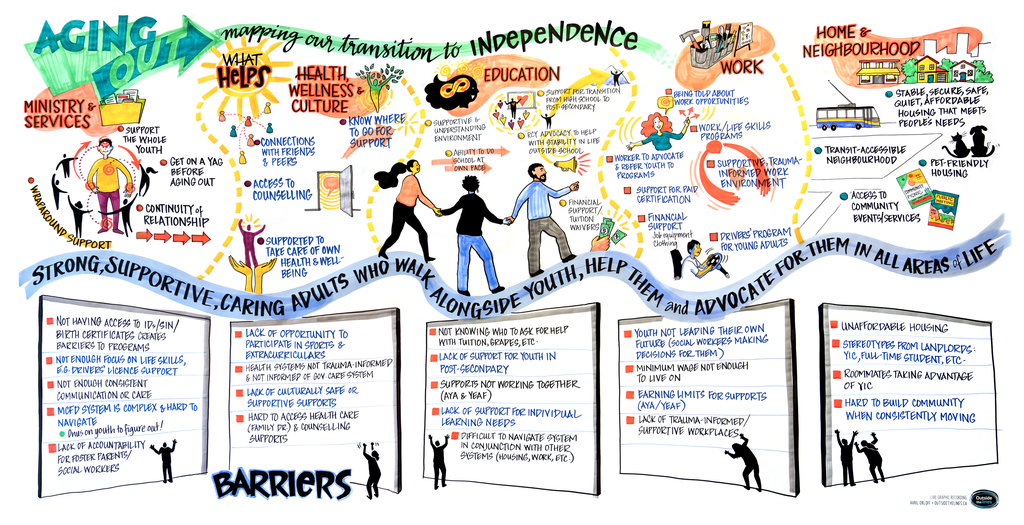
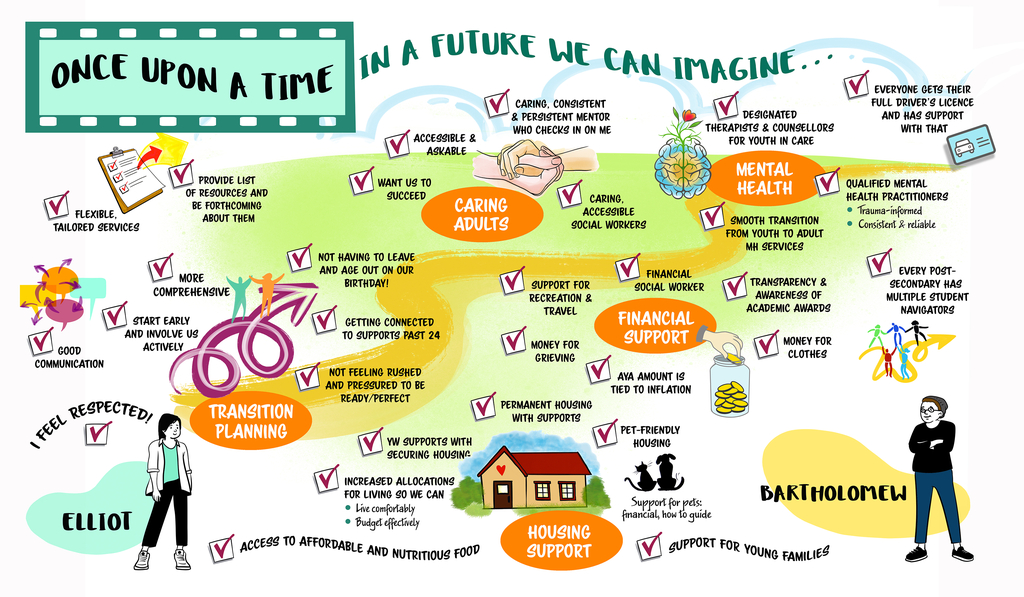
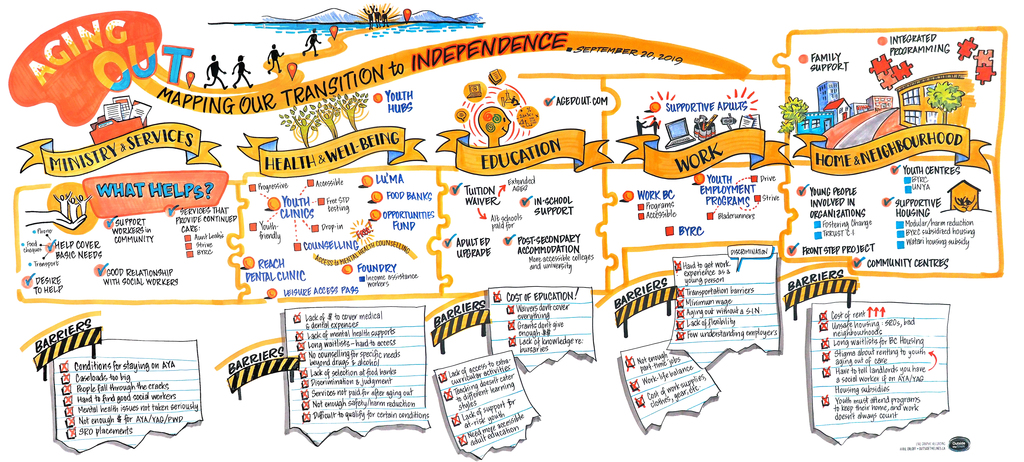
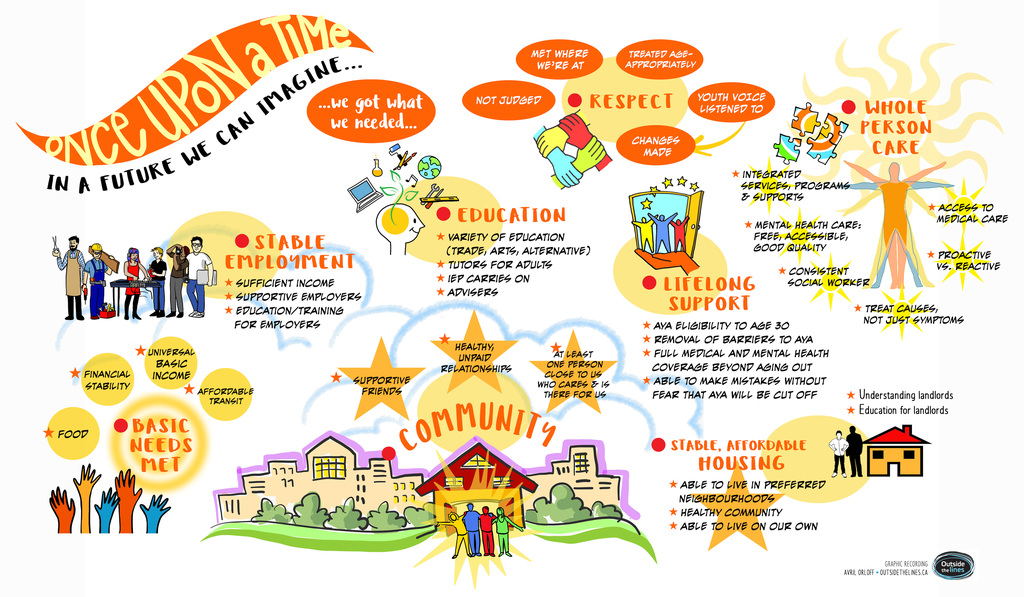
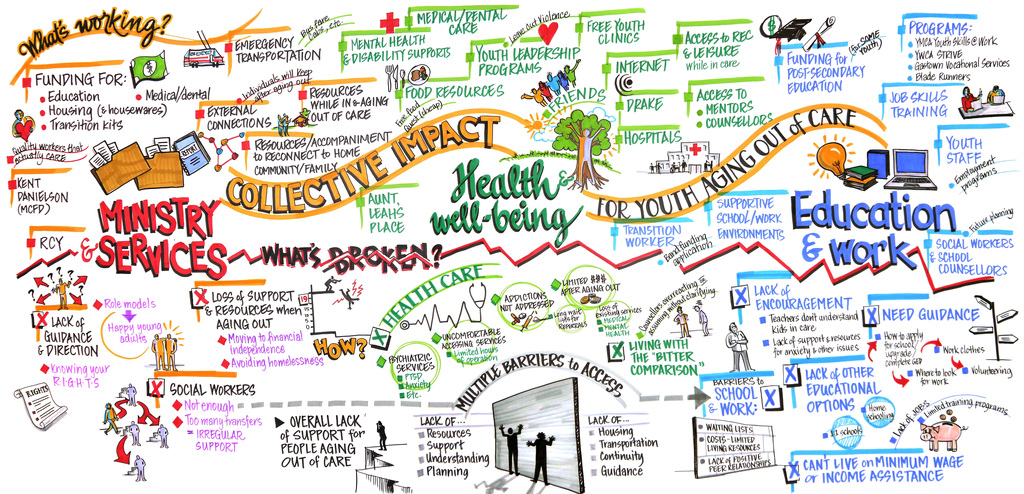
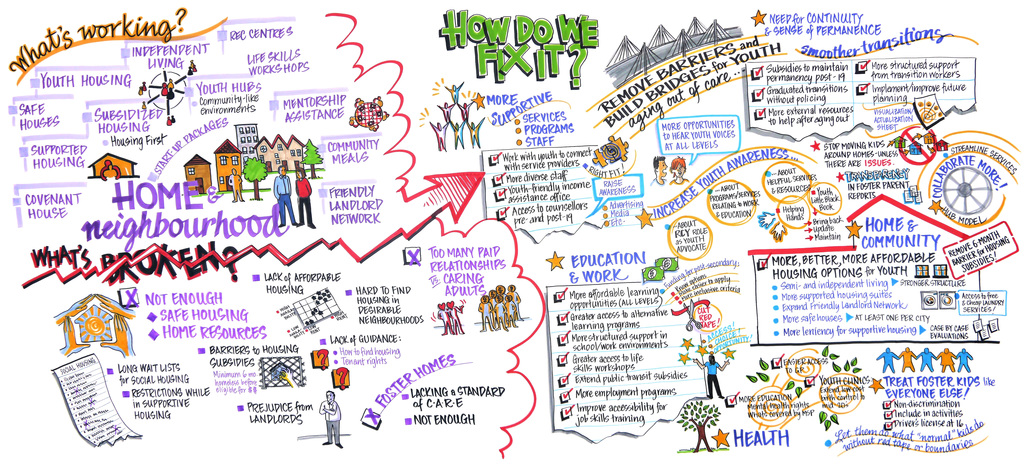
TRRUST is guided by the experience of young people in and from the care system. One of the ways in which TRRUST has sought to understand the needs of youth transitioning from care was through the development of Journey Maps. Journey Maps are a visual artifact used by the CYL and Strategic Advisory to measure changes, and to examine the current landscape and experiences of young people as their transition out of government care in Vancouver.
Journey Map sessions invite young people aged 18–24 who have governmnet care experience to map their transition to independence through guided facilitation. The first Journey Map session was facilitated in 2016, then again in 2019 and 2023. Continuing to facilitate this activity helps to examine the current landscape against past maps, and to develop a shared pathway for moving forward.
To understand their needs and to help TRRUST set priorities for change, each session supported youth to reflect on the following
Following each session, visual representations of the discussion and mapping activity were created:
The following reports and fact sheets were prepared by members to support the work of TRRUST Collective Impact:
BROCHURE:
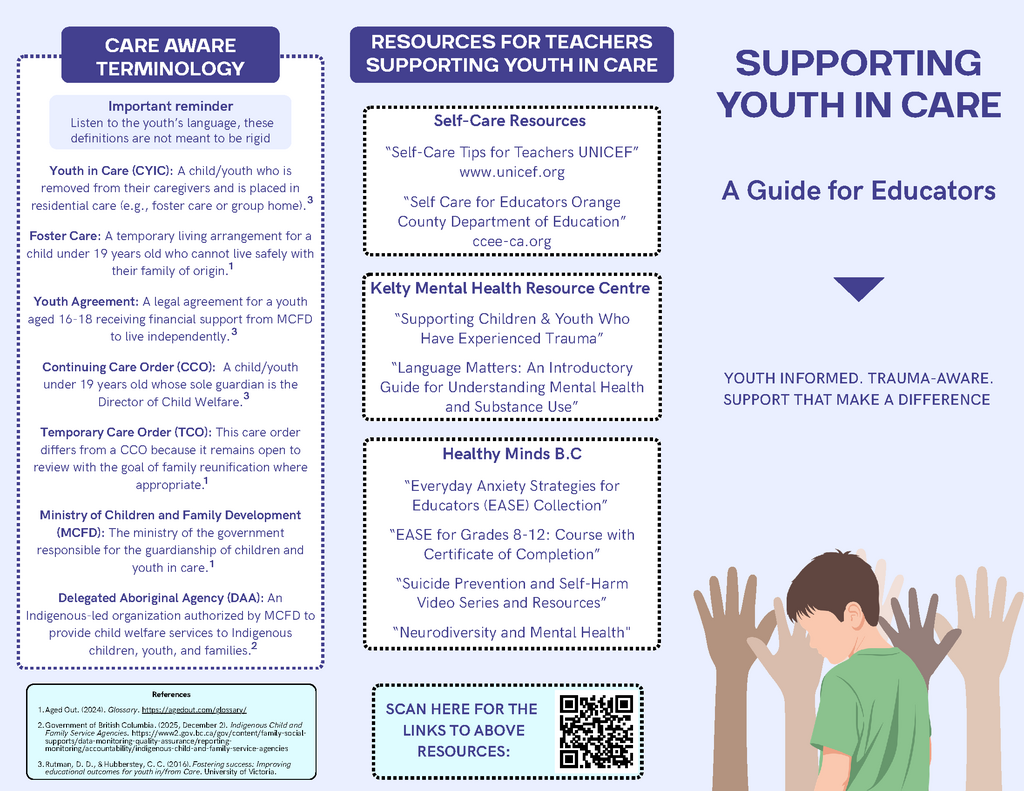
This guide provides a brief overview considerations and strategies to better support BC youth in and from government in education.
REPORT:
Young people transitioning out of government care in Vancouver are facing alarming levels of food insecurity. This report, grounded in the voices and experiences of over 140 youth, reveals a crisis that is both immediate and systemic.
REPORT:
This is the second report prepared for TRRUST to assist with a review of the collective’s progress in contributing to improving outcomes for youth transitioning out of care in Metro Vancouver.
REPORT:
This report was prepared for TRRUST to assist with a review of the collective’s progress in contributing to improving outcomes for youth transitioning out of care in Metro Vancouver. The results will also be used to help set the direction and focus of the collective moving forward.
REPORT:
This report shares findings from the BC Adolescent Health Survey on the health and well-being of BC youth in government care living in the Vancouver Coastal region.
REPORT:
This report was prepared by McCreary's Youth Research Academy sharing results of a survey about the employment experiences and challenges of youth aging out of care in Vancouver.
REPORT:
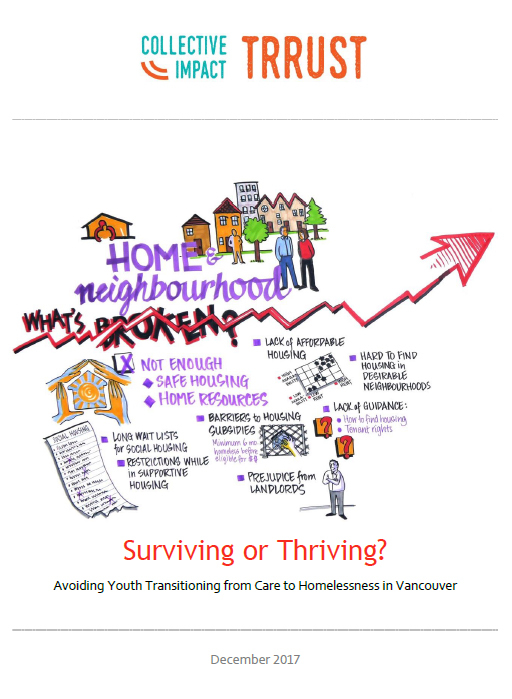
The report includes data from 56 youth who participated in focus groups or completed a survey. It also includes an economic analysis which looks at potential income sources and housing costs, as well as recommendations for the collective.
FACT SHEET:
The report includes data from 56 youth who participated in focus groups or completed a survey. It also includes an economic analysis which looks at potential income sources and housing costs, as well as recommendations for the collective.
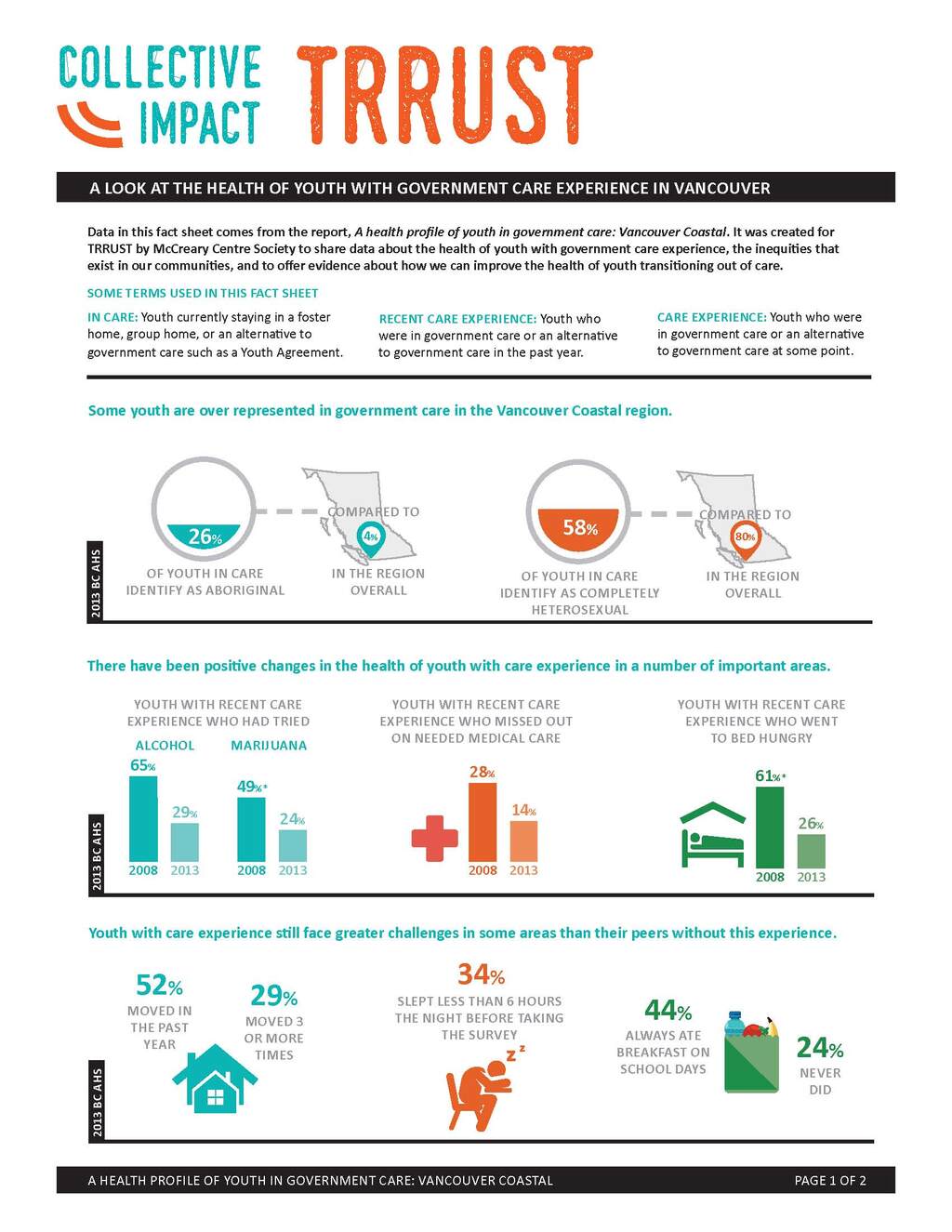
Phase one of McCreary's evaluation of TRRUST Collective Impact occurred from 2014 to June 2016. Read the results of phase one:
McCreary Centre Society evaluated phase two of the collective impact initiative, which ran from July 2016 to September 2017. Phase two included developing a governance structure and implementing the Caring Connections success pillar.